
Reading the Crawford County Current Owner Record
Start any Crawford County owner search with the Tax Assessor's parcel record. It reflects the latest published tax digest. That entry links a situs address to a parcel number. It also carries the name on the tax roll. It's a quick, present-tense lead. It is not a deed, though, and it is not a title opinion. The parcel card, the newest conveyance, and the tax-bill account each answer a different question. The strongest result keeps every field tied to its actual source.
| Assessment owner | The name carried on the current published digest record. |
|---|---|
| Situs address | The location of the land or improvement being assessed. |
| Mailing address | The address used for assessment notices and tax correspondence. |
| Parcel identifier | The stable key used to reconcile the assessor, tax, map, and deed research. |
| Deed reference | The book/page or instrument lead that should identify the recorded conveyance. |
| Transfer detail | The deed date, recording date, parties, and instrument type that explain vesting. |
Keep one caution in mind. The owner of record is not always the occupant. A separate mailing address can point to a nonresident owner, an entity, a fiduciary, or someone who simply gets county notices elsewhere. Use that address only for a legitimate property matter. Never infer where a person lives from it.
Why Crawford County Owner Data Can Lag a Deed
Crawford County assessment data follows the annual tax digest and a January 1 valuation date. A deed recorded after that snapshot may not show up in the published parcel record yet. The qPublic landing page states that its values reflect the most current published digest. That is a digest, not a live recording feed.
Record distinction. An assessment owner is a tax-roll entry, not proof that the named person occupies the land or holds unchallenged title.
What if qPublic and the deed index disagree on a name? Save the parcel ID and both dates first. Then ask the Tax Assessor whether the digest entry awaits an update, and ask the Clerk whether the conveyance was accepted and indexed. A recorded correction or re-recording may explain the mismatch on its own.
Crawford County Current Owner Names, Situs, and Mail
The situs field identifies the subject property. The mailing field tells the county where to send notices and tax bills. Neither one proves where a person lives. That distinction matters in Crawford County. A Roberta postal label can reach past the incorporated city, and Knoxville remains the county seat even though county offices sit in Roberta.
Keep the parcel number beside both addresses. ZIP codes like 31078 or 31050 are delivery geographies, not title boundaries. If city status matters, compare the parcel and its legal description against the county map. Confirm jurisdiction with Planning and Zoning. Do not trust a city line inside a mailing address.
Testing Crawford County Owner of Record Vesting
The Crawford County Clerk of Superior Court, Real Estate Division, records land transactions. Look for the most recent conveyance that actually transfers ownership. It should show the grantor, grantee, and deed type. It should also show execution and recording details, and the legal description. Security deeds, liens, releases, easements, and plats may be recorded later. These do not change the fee-simple owner. The newest document is not always the newest ownership deed.
- Owner of record
- The party shown by the official record used for the question, subject to its update cycle.
- Vesting
- The words in the deed that state who takes title and in what capacity.
- Tenancy
- The form in which two or more grantees hold an interest, as stated by the instrument.
- Registered agent
- The public contact listed for a Georgia entity; the agent is not automatically the landowner.
When a Crawford County Current Owner Is an Entity
A deed may vest title in a corporation, LLC, trust, or estate representative. Copy the grantee name exactly as written, punctuation and suffixes included. The Georgia Secretary of State business search can then confirm an entity's legal name, status, control number, and registered-office details. Those details appear when available.
An entity filing proves nothing about personal ownership. Its registered agent, organizer, or officer does not own the parcel. That person merely appears in the filing. A trust may never show up in the corporate database at all. Estate transfers need the deed, fiduciary authority, and any court order. The later assessment update must be reconciled too. Restricted vital records serve only as leads. They do not convey land.
Confirming a Crawford County Current Owner
Build a short chain of evidence whenever the exact present owner matters. That discipline keeps an annual assessment snapshot from posing as the recorded conveyance. It also separates entity information from the deed itself.
- Search the Crawford qPublic parcel route by the best available address, owner, or parcel clue, then retain the parcel ID and assessment name.
- Search the modern GSCCCA index for the named grantee and likely transfer period; use Kofile for the 1830-1989 historic index range.
- Open the most recent ownership conveyance and read its grantee, capacity, legal description, instrument type, and recording date.
- Check later corrective instruments and compare the deed with the tax-bill account; investigate any name or parcel mismatch with the proper custodian.
The GSCCCA name search offers choices for county, party type, instrument type, name, date range, and display. Results and images may require an account. When online access cannot supply a needed image or certified copy, contact the Clerk at 100 GA Hwy 42 S in Knoxville or call 478-836-3328.
Instrument Types That Complicate a Crawford County Current Owner
Warranty deeds and quitclaim deeds can both convey an interest. They do not carry the same promises, though. A deed from estate, foreclosure deed, sheriff's deed, or tax-sale deed adds context that belongs in the instrument itself. That context may also belong in any related court file. A security deed usually secures a loan. Report it as a lien, not a sale.
Corrective deeds and re-recordings fix names or descriptions without creating a new arm's-length purchase. Releases can clear a lien while leaving ownership untouched. Read the instrument type, parties, legal description, and recording sequence together. That tells you more than a lone sale line on an assessment card ever will.
The Crawford County Owner-Card Access Gap
The county and the Georgia Department of Revenue both route owner-card requests to Crawford qPublic. The live Schneider application behind it does not open for public viewing. Treat that as an access limit, not proof that a parcel lacks an assessment record. Exact parcel-card labels, owner-history fields, exports, and update details remain unavailable until access is restored.
Three practical routes still work. Use the county landing page, call the Tax Assessor at 478-836-2800, or request the parcel record by parcel ID and situs. The Georgia Open Records Act generally requires a custodian to respond within three business days. The response must state timing, cost, and any exemptions in writing. The office is not obligated to create a new title report.
Watching New Crawford County Owner Filings
For filings that have not happened yet, GSCCCA's Filing Activity Notification System adds a free, opt-in alert layer. It is tied to a registered name. It needs an account. Remember that it only watches forward, not backward. GSCCCA itself cautions the service is neither comprehensive nor guaranteed current, so an alert never replaces a direct Clerk or deed records check.
When an unfamiliar instrument shows up, save its instrument or book/page reference before calling the Clerk. Resist the urge to assume fraud from a name match alone. Common names, lien releases, easements, and corrective filings all produce confusing hits in the index. The recorded image and parcel description are the real evidence to inspect.
Contacting a Crawford County Current Owner Lawfully
A mailing address on a public tax record can serve as a lawful route. It works well for a parcel-related letter. Disclose and use only what the situation requires. Never publish sensitive estate details or full birth data. Keep account credentials, protected voter addresses, and unredacted identifiers private too. Georgia's VoteSafe rules and state vital-record restrictions sit entirely apart from land-record access.
Lawful use. Use Crawford County owner information only for a legitimate property purpose. Never use a public mailing address to stalk, harass, intimidate, or harm anyone.
For a broader address-to-deed route, apply the Crawford County ownership method. Prior transfers belong on a different track, covered in the previous-owners guide.
The AssuranceGov tax search offers another way to reconcile an account, parcel, or tax bill. It also works with an address or name clue. The official search page displays its lookup form on screen.
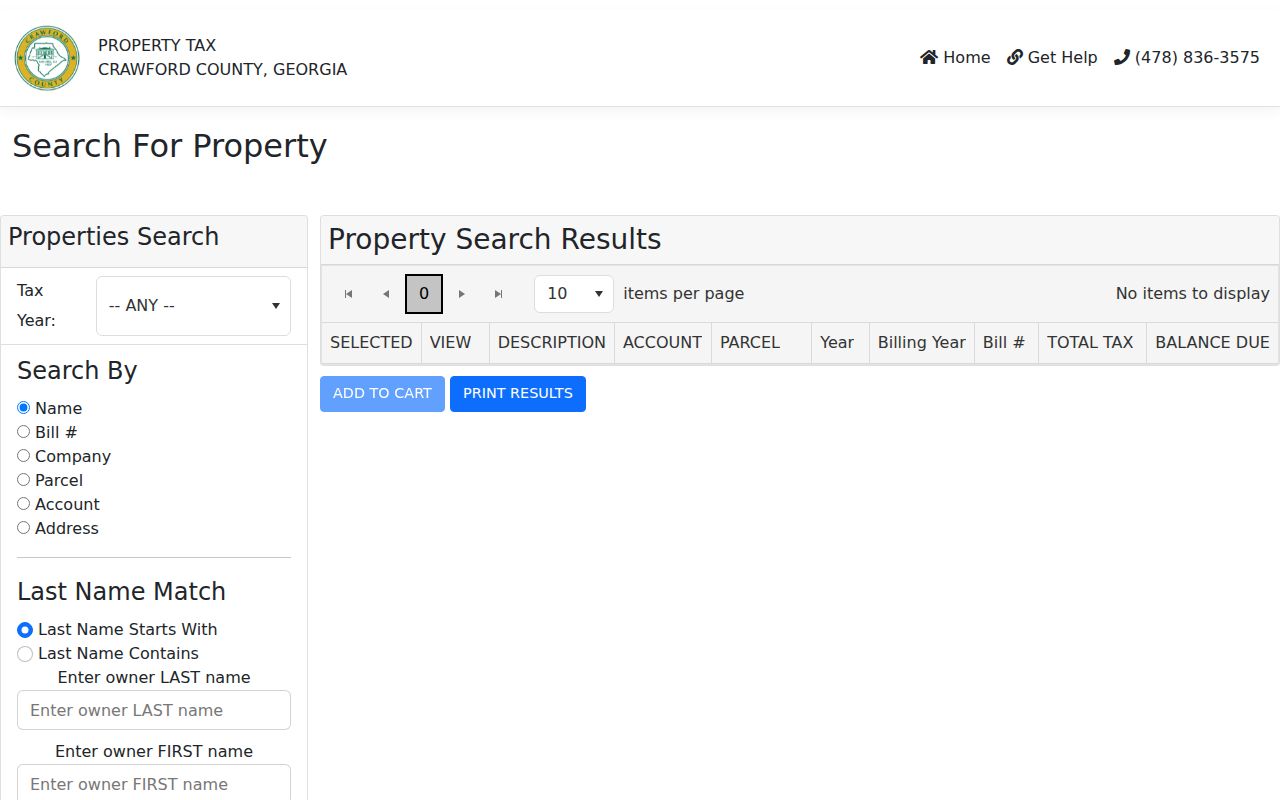
Those on-page controls help you locate a tax account. They do not turn a bill name into certified proof of current title.